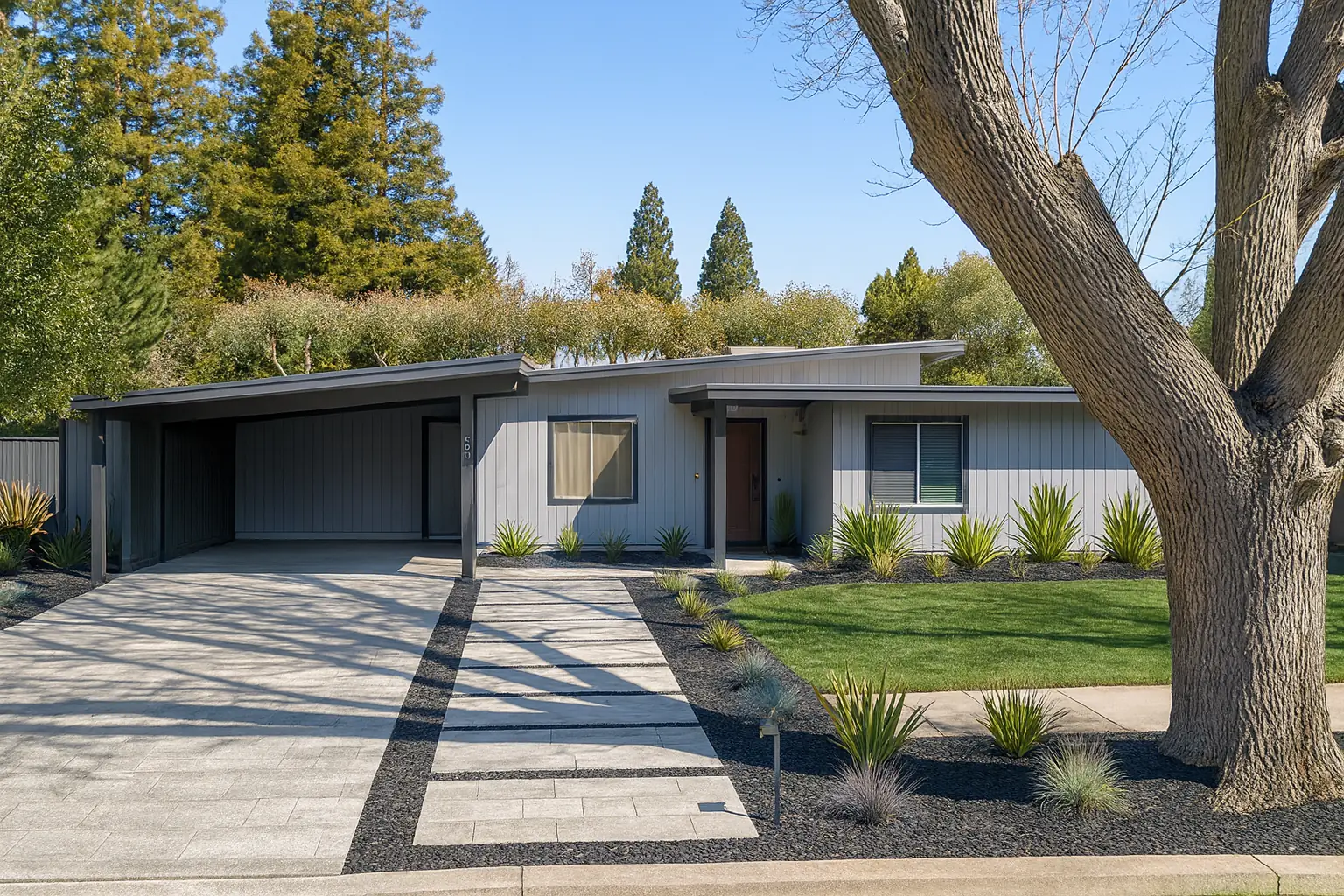
Redwood City · 94061 · 1950–1956
The roofs fold inward.
Atherwood opened in November 1950 — Joseph Eichler's first subdivision in San Mateo County, and the largest collection of butterfly roofs he ever built. Roughly ten of them, on four streets, seven years before Palm Springs made the shape famous.
Redwood City · Boyenga Team photography · virtually altered
Architectural Forum · Subdivision of the Year · December 1950
Atherwood shared the award with three Palo Alto Eichler tracts, and was featured in Ladies' Home Journal that November. Eichler had been building modern houses for barely eighteen months.
01 · The claim
A small market that happens to hold a first.
Redwood City is not an Eichler city the way Palo Alto is. It is 121 buildings against Palo Alto's 2,700 — 64 at Atherwood, 28 at Fairwood, 23 at Sequoia Meadow, plus six duplexes. But the ones here are early, and one tract did something Eichler never really repeated.
Eichler Network — the field's standing authority on these houses — records Atherwood as holding the largest collection of butterfly roofs in Eichler's entire body of work, and notes that Eichler himself was reluctant to build them. Roughly ten went up on Atherwood Avenue, Parkwood Way, Cedarwood Way and Oakfield Avenue in 1950. The form would not reach Palm Springs until William Krisel's Twin Palms in 1957.
What follows from that date matters more than the roofline. A house from November 1950 is Eichler before the atrium existed. The first courtyard plan came in August 1951; the atrium was not marketed as a feature until 1957. So an Atherwood house is not an Eichler missing its atrium. It is the earlier idea — glass wall, post and beam, warm slab, garden on the other side of the glass — executed by Anshen & Allen before the plan book grew.
- Architects
- Anshen & Allen; Jones & Emmons
- Not
- Claude Oakland — he opened his own practice in 1960, six years after Eichler stopped building here
- Plan
- AA-1 at Atherwood
- Heating
- Radiant tube cast into the slab
- Lots
- ~6,000–7,300 sq ft
- Original size
- ~1,140–1,790 sq ft
- Recorded map
- San Mateo County RSM 31/39
02 · The roof
Why a butterfly roof is a floor plan decision.
Turn a gable upside down and the consequences run all the way through the house. Here is the section.
03 · The other thing that only happened here
Eichler built duplexes exactly once.
Twelve units in six buildings, one dead-end street in Redwood City, 1956. Not in Palo Alto. Not in Sunnyvale. Not in Marin. Nowhere else, ever.
He built them to lease rather than to sell — a 1956 newspaper advertisement offered "Deluxe Eichler Duplexes for lease" at $146 a month, with Joe's brother Al handling the leasing. Two years after he stopped building houses in Redwood City, he came back to the city to try something he never tried again.
They are small — about 945 square feet a unit — with low gable roofs and a shared carport in the middle of each building, the front doors opening into it. Inside, the full vocabulary at reduced scale: floor-to-ceiling glass, wood panelling, a fireplace, a private patio.
Eichler later went on to build a wide variety of housing — although, unless some remain to be found, he never built duplexes again.
- Where
- Roble Avenue, 94061 — near Atherwood, but a separate development
- Built
- 1956, as rental housing
- Scale
- 12 units in 6 buildings, ~945 sq ft each
- Zoning
- R-2, so ADU pathways apply and SB 9 does not
04 · The tracts
Three tracts in five years, then one return.
Atherwood is the one with the history. The next two are smaller, later, and — we will say this plainly — less well documented as Eichler work than Atherwood is. The fourth is not a tract at all.
Nov 1950 · The first
Atherwood
Anshen & Allen, plan AA-1. Subdivision of the Year. The butterfly roofs. Atherwood, Parkwood, Cedarwood and Oakfield.
1953
Fairwood
Lyons Street, 28 homes. Around 1,300 square feet, three bedrooms, two baths. Recorded in county records as "Fairwood Sub."
1954 · The last
Sequoia Meadow
Northumberland Avenue and Cypress Street, 23 homes. A predominant 1,110 square foot model — the smallest of the three tracts.
1956 · The return
Roble Ave duplexes
Twelve units in six buildings, built to lease at $146 a month. Not a subdivision — and the only duplexes Eichler built anywhere.
The character of the streets
What driving Atherwood actually feels like.
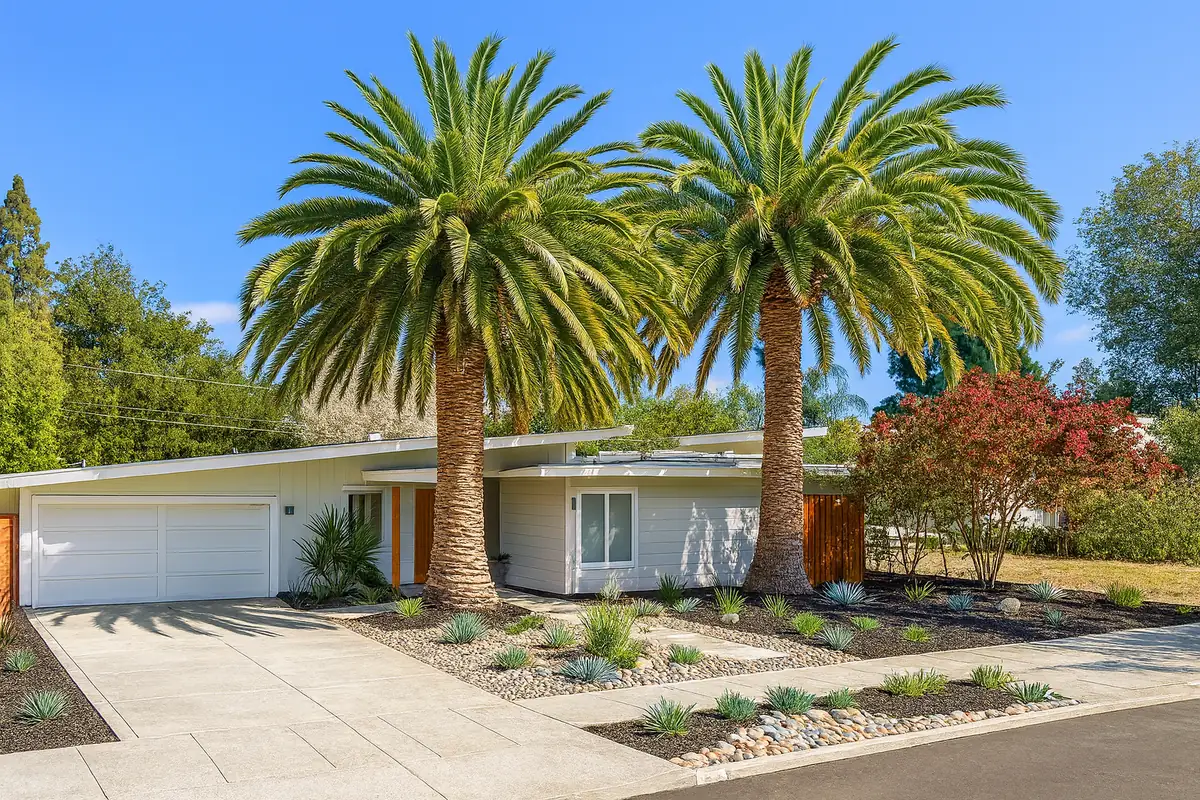
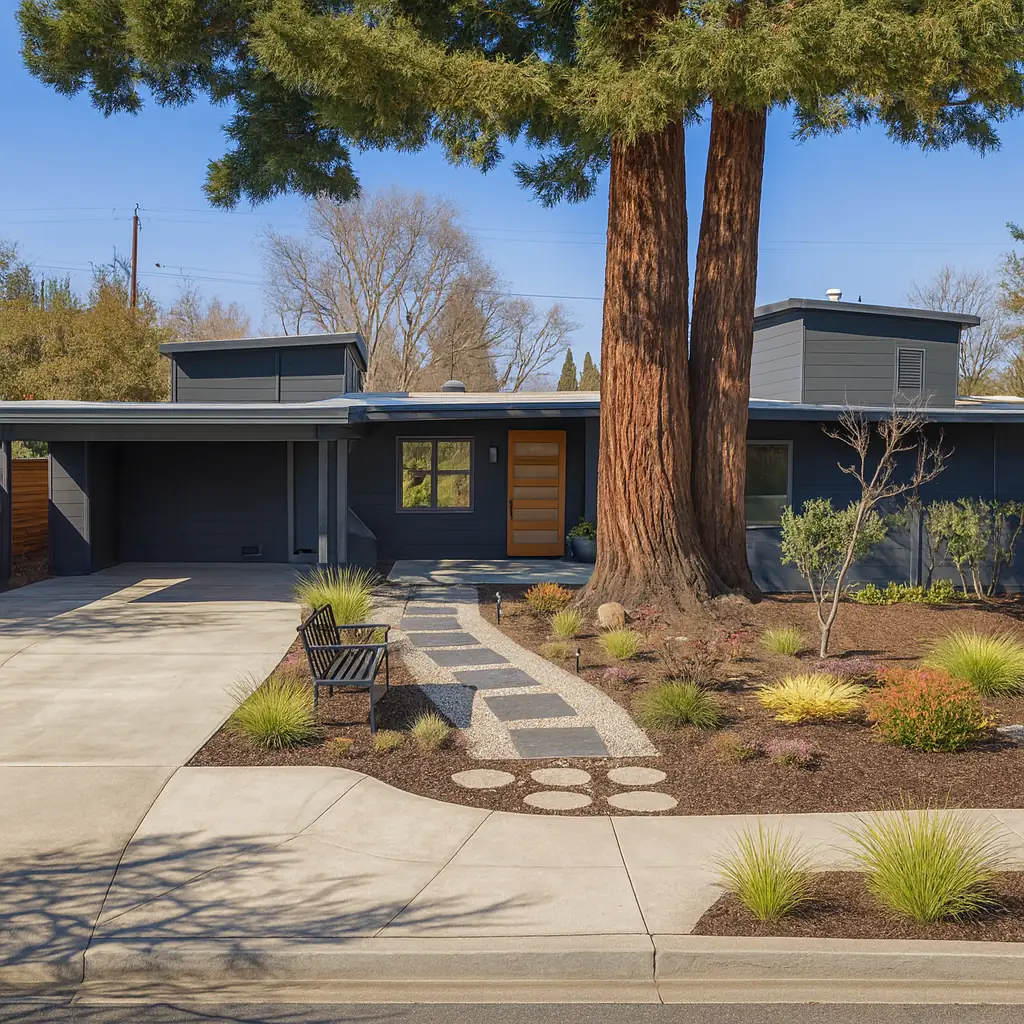
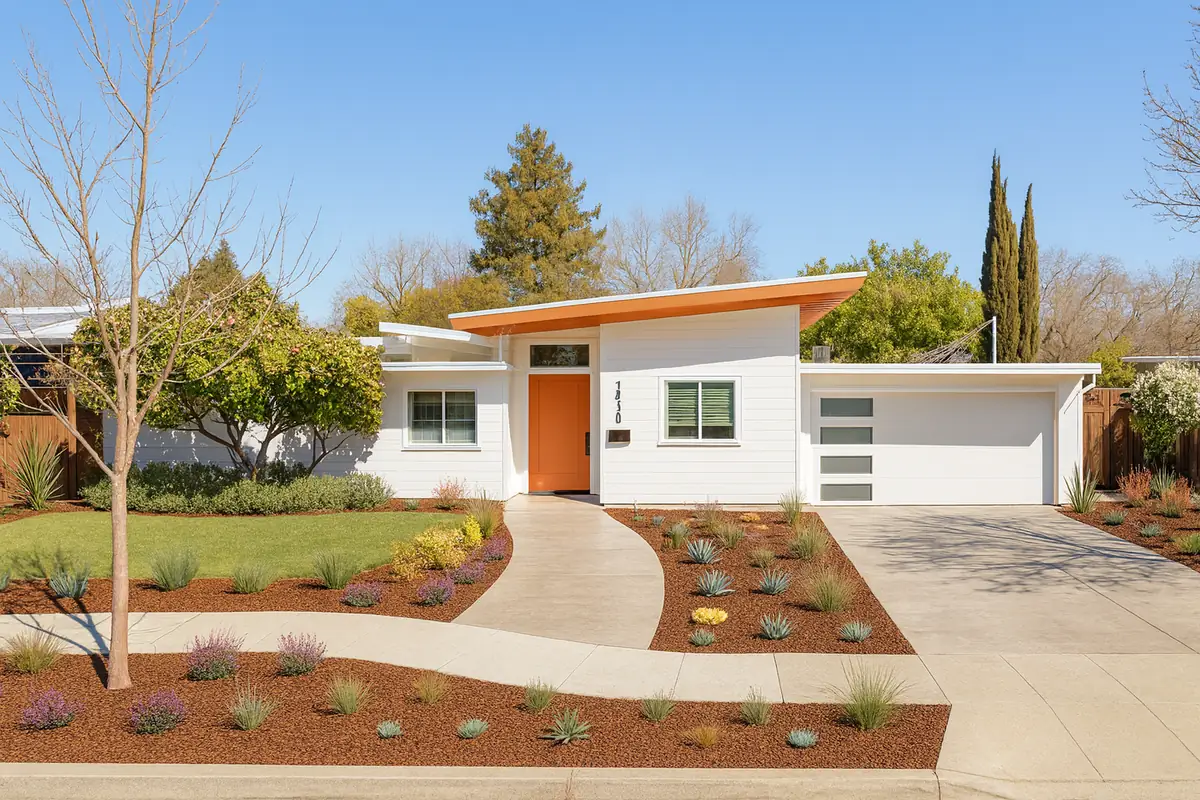
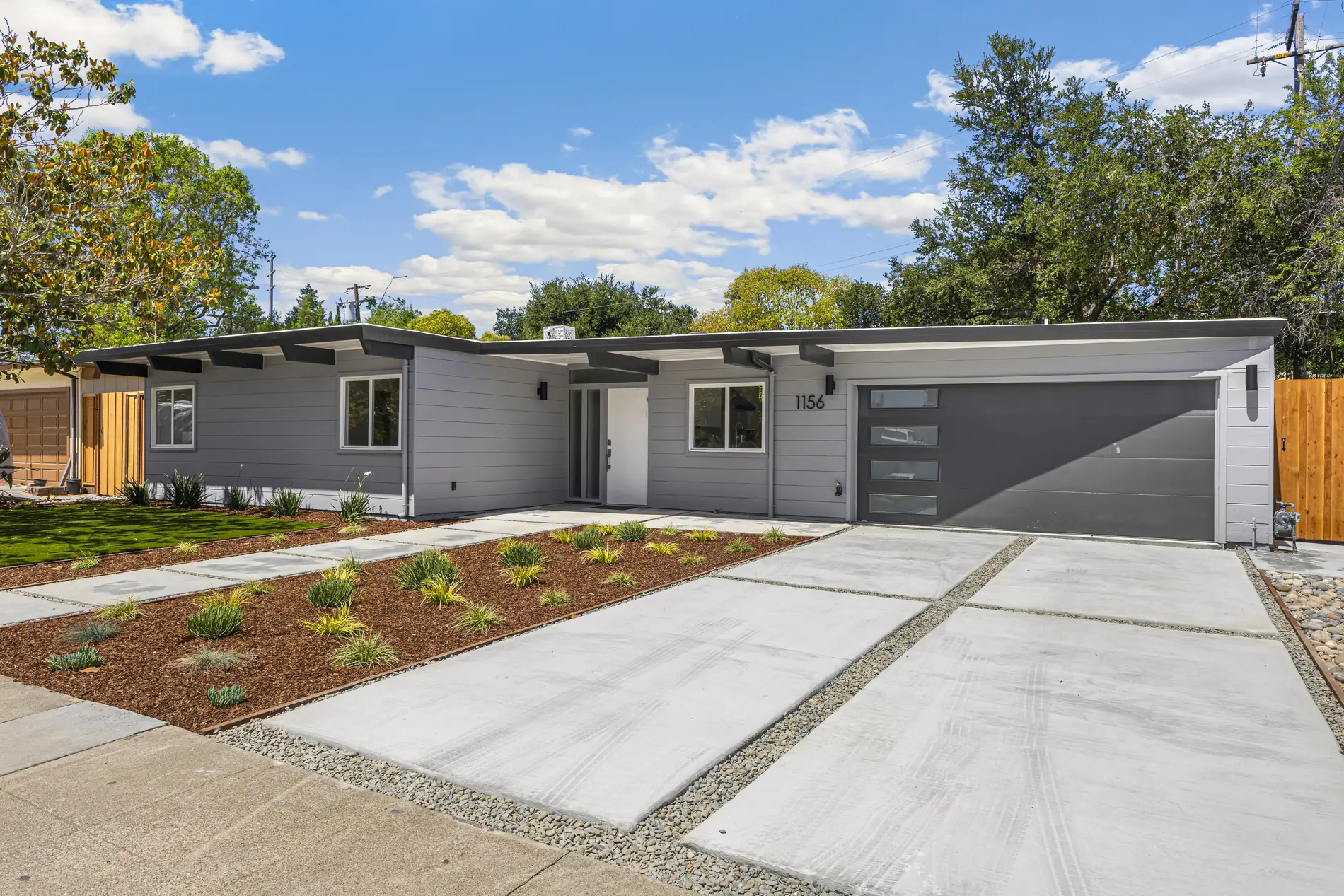
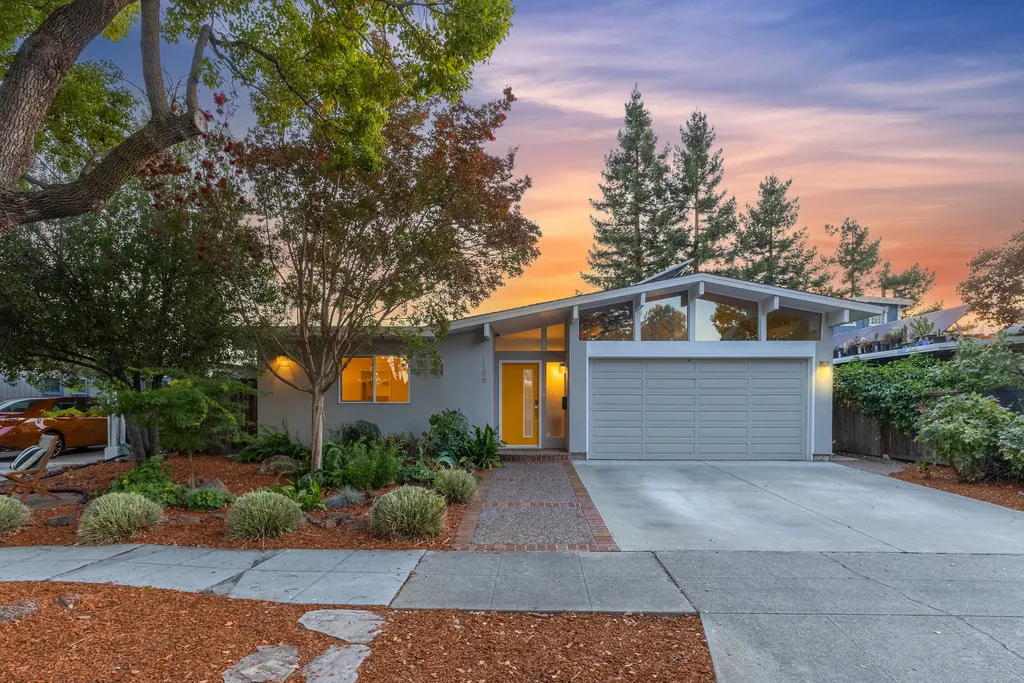
Low rooflines, deep overhangs, carports open to the street, and a fence line doing most of the talking. Our own Redwood City photography, virtually altered, and not tied to any address.
What they look like
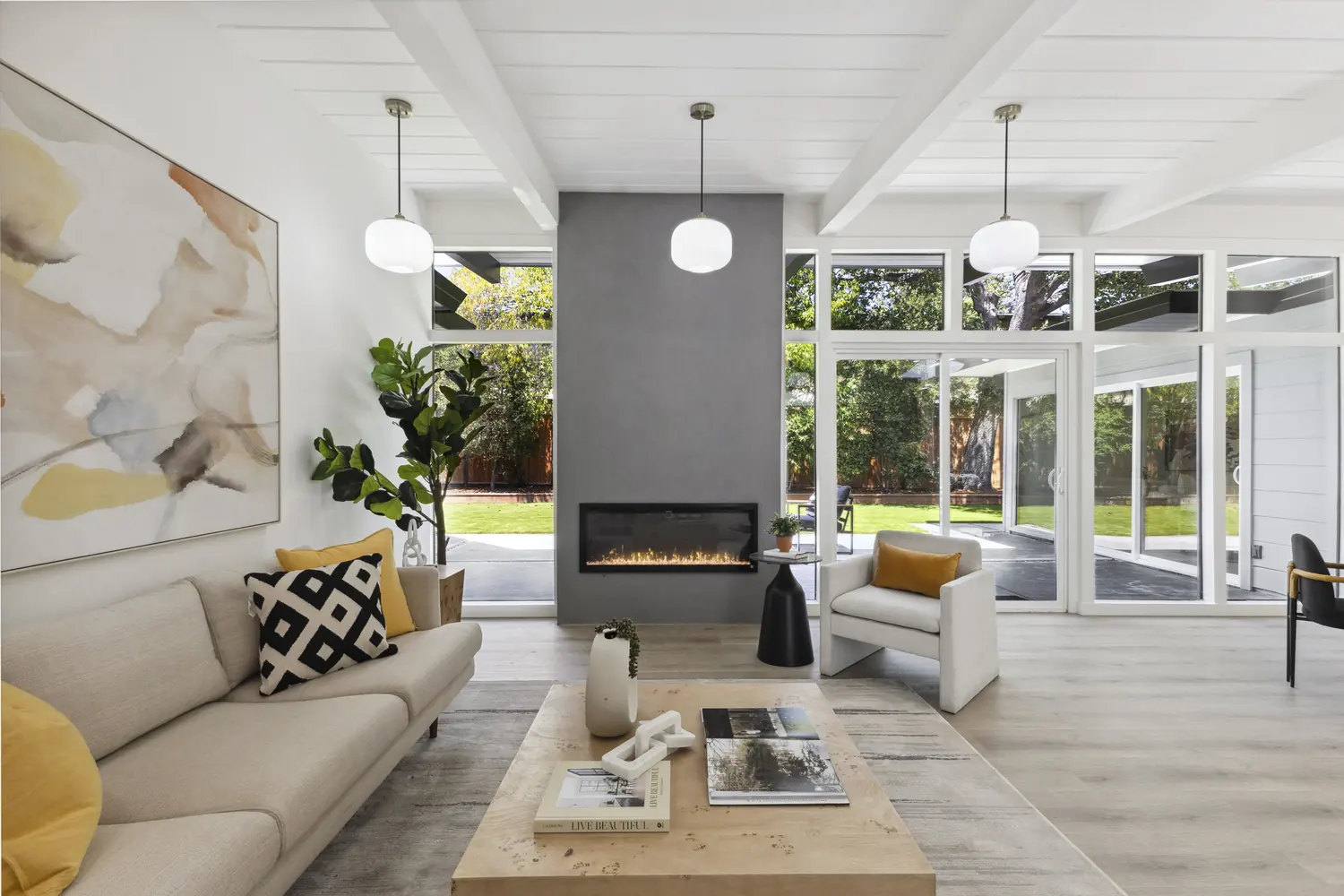
Two houses, photographed properly.
Everything on this site is our own photography of Redwood City houses we owned or listed. No stock, nothing generated.
05 · Where they are
Five years of building, a gap, then the duplexes.
06 · What we have done here
We bought one, renovated it, and sold it.
1156 Parkwood Way is a 1950 Atherwood house on a 6,030 square foot lot. We took it on as our own project — not a listing for someone else — and rebuilt it: new dual-pane glazing throughout, all-new electrical and plumbing, a new foam roof, skylights, a four-zone heat and air system, and a kitchen around a Bertazzoni range.
It sold on 17 September 2024. The whole scope, the decisions we would make differently, and what the radiant slab has to do with it are on its own page — including the part where we stopped using the slab.
Sold
$2,300,000
17 September 2024
Built
1950
Atherwood, Anshen & Allen
Size
1,530 sf
6,030 sf lot
Ten-foot high glass walls looking over the garden, the post-and-beam ceilings, the redwood walls.
07 · The uncomfortable part
Nothing here is protected.
Palo Alto adopted Eichler design guidelines in April 2018 and has eleven tracts under Single Story Overlay zoning. Green Gables and Greenmeadow went on the National Register in 2005. Sunnyvale has single-story combining districts. Cupertino has a resident-initiated overlay procedure.
Redwood City has none of it. Atherwood is not one of the fifteen neighbourhoods in the city's Residential Design Guide, and not one of the city's seventeen recognised neighbourhood associations. The residential standards allow two and a half storeys and twenty-eight feet citywide, with no floor-area ratio cap. A second storey needs an Architectural Permit — staff-level review, not neighbourhood-character protection.
There is no historic resources inventory covering these houses, no mid-century survey, no CC&Rs and no homeowners' association. No Redwood City tract has pursued historic designation.
Read that both ways, because it cuts both ways. If you own one, the thing limiting supply is the recorded map and nothing else — there are only so many, and nothing stops the next one being altered past recognition. If you are buying, you have latitude a Palo Alto Eichler owner does not have, and a responsibility that comes with it.
We have not audited how many have already been lost. Anyone who tells you the number without having walked the recorded map against assessor data is guessing.
Talk to us
What is a Redwood City Eichler worth right now?
With 115 houses and long stretches where none are for sale, an automated estimate has almost nothing to work from. Tell us the street and we will tell you what we actually think, and why.